What Is a Video ROI Playbook, And Does Your Business Need One?
A Video ROI Playbook is an implementation guide that connects your business strategy to your video assets. It defines who needs to see each video, where each cut gets used, and how you’ll measure performance after launch. That’s the industry term.
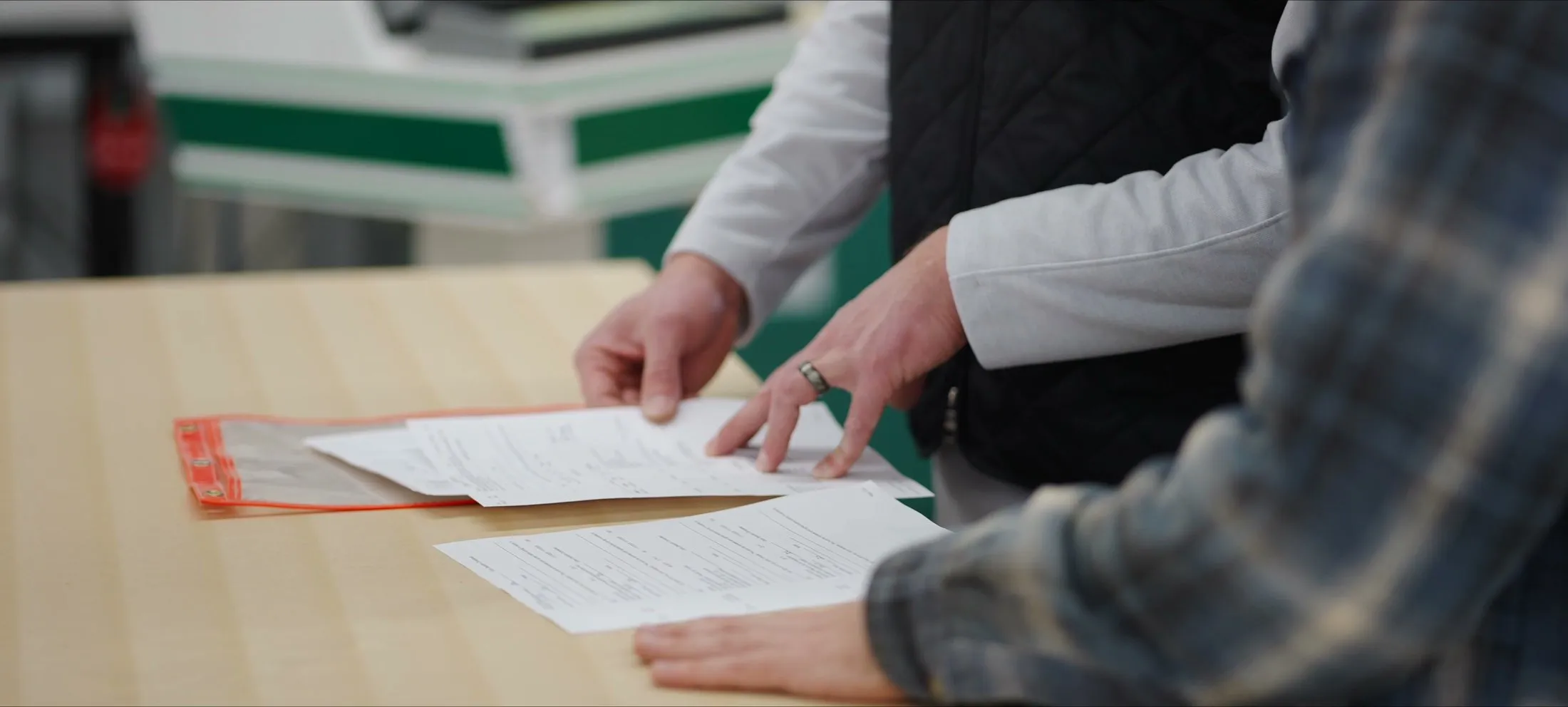

A Video ROI Playbook is an implementation guide that connects your business strategy to your video assets. It defines who needs to see each video, where each cut gets used, and how you’ll measure performance after launch.
That’s the industry term. At Media Core, we call it the Implementation Plan, and it’s the fourth phase of the Media Core Method. Same idea, but it isn’t a document we bolt on at the end. It’s the last step of a system that started working before the cameras ever showed up.
Here’s what most companies learn the hard way: the video is just the tool. Delivery day gets treated like the finish line. The video goes on the homepage. It gets shared once. The rest of the footage sits in a folder nobody opens. We’ve produced 800+ videos for 450+ businesses over 8 years, and the video itself is almost never the problem. The problem is nobody gave it a job.
A video that lives on a hard drive isn’t a video. It’s a line item.
What Does a Video ROI Playbook Include?
Whatever a company calls it, a real one covers:
- The business goal the video supports
- Core messaging
- Every asset coming out of the shoot
- Where each asset gets published or used, and by whom
- A rollout timeline
- What success looks like, in numbers
- Checkpoints to review performance after launch
None of this is complicated. Most companies just never write it down. So the footage waits on someone to have a free afternoon, and the afternoon never comes.
Why Do So Many Company Videos Underperform?
Almost never because of the video. We’ve watched this play out for eight years, and the failures follow a pattern.
Nobody owned it after delivery. Marketing assumed sales was using it. Sales never knew it existed. It’s on the homepage and nowhere else.
It was built for everyone, so it landed with no one. A video trying to impress prospects, recruits, and current customers at the same time usually moves none of them.
Nobody defined what winning looked like. Six months later the conversation is “did that video work?” and there’s no honest way to answer, because nobody agreed on the number beforehand.
The rest of the footage went unused. You paid for a full production day and used ninety seconds of it.
Every one of those is a planning failure, not a production failure. Which is good news. Planning problems are fixable, and they’re a lot cheaper to fix than reshooting.
What Does It Cost You to Skip This?
Harder to see than a line item on an invoice, which is exactly why it gets ignored.
Think about the last ten prospects who visited your website. How many of them found out everything your company can actually do for them? Most companies never see that moment happen, because it doesn’t. People buy the one thing they called you about and never learn about the other five. Don’t assume everyone knows what you can fully do for them.
Same math on the hiring side. If your best recruiting asset is a job posting, you’re competing for candidates against companies who show theirs what the work actually looks like.
The video was never the expense. Not using it is.
How Does Media Core Build ROI Into Video Production?
Any video company can make a video. We’re a strategic video partner, which means we follow a proven system: the Media Core Method.
The short version is that we take the right video with the right messaging, build a plan to get it in front of the right audience, and produce it in a way that actually achieves the result. That sounds simple. The system underneath it is not.
1. Strategic Discovery
Before we decide what to film, we dive into your business. How you sell. How you market. How you operate. Your goals, your bottlenecks, your team, and where you want to take the company.
The goal is never “make a brand video.” The goal is a business tool. Some clients need to build trust before a sales call ever happens. Some need their sales team to explain a complex product. Some need recruiting content because they can’t hire fast enough. What the tool needs to do decides everything that comes after.
Discovery is also where we map who the video is actually for, because one shoot usually serves more people than the marketing department:
- Prospects who need to understand what you do
- Buyers comparing you against two other bids
- Sales reps who need something stronger than a follow-up email
- Job candidates deciding whether to apply
- Leadership teams who need an asset for the big conversations
2. The Video Blueprint
Everything from discovery becomes the Video Blueprint: the whole game plan laid out. The story, the messaging, the audience, and the full list of assets the production day needs to produce. That usually means planning well beyond one hero video:
- Homepage video
- Sales cut for estimates and follow-up emails
- Social clips
- Leadership soundbites
- Email embeds
- Paid ad cutdowns
- Internal onboarding clip
You approve the Blueprint before we shoot anything. Nothing gets filmed without a plan for where it’s going.
3. Production
Our in-house crew produces the video. Because the Blueprint already defined what every asset needs to accomplish, the strategy shapes the interview questions we ask on camera and the way we edit every cut. Same footage, built for different jobs.
Same crew every shoot, too. They’ve done this hundreds of times, and it shows up in how comfortable your people are on camera. Most of the best moments we capture come from someone forgetting the camera is there.
4. Implementation and ROI
This is the playbook part, and it’s where most video projects quietly die. You get an Implementation Plan that gives every cut a job on day one. Your sales team knows which video goes in which email. Your marketing team knows what runs where.
Then we stay with you for 30, 60, and 90 days after delivery. The question isn’t whether you liked the video. It’s whether the assets are getting used, whether they’re producing a return, and where the rollout needs to shift.
What ROI looks like depends on the objective:
- More time spent on your website
- More qualified sales leads
- Better applicants
- Better click-through on social and paid
The Implementation Plan defines those numbers upfront so nobody has to argue about them later.
Can You Build One Yourself?
Yes. Honestly, you should, whether you hire us or not.
Sit your sales lead, marketing lead, and one person from ops in a room. Write down what you need the video to accomplish in one sentence. List every place a prospect, a candidate, or a customer touches your company. Decide which of those places needs video and what it has to say there. Assign an owner to each spot and a date. Pick the number you’ll check in 90 days.
That’s the whole exercise. It takes a few hours and it will make any video you produce more valuable, including one you shoot yourself on a phone.
The reason companies hire us for it isn’t that the thinking is complicated. It’s that the meeting never gets scheduled, and when it does, it’s hard to be objective about your own business. An outside partner asks the questions nobody inside wants to ask.
Does Your Business Need a Video ROI Playbook?
Probably, if any of these sound familiar:
- You know you need professional video, but you’ve been burned by footage that went nowhere
- You sell something complex or premium that a brochure can’t explain
- Sales, marketing, HR, and leadership are all telling slightly different versions of your story
- You’re heading into a hiring push, a new market, or a new service launch
If your business sells on trust and expertise, the system behind the video matters as much as the video. The video communicates. The system makes it pay.
Common Questions
Is a Video ROI Playbook a separate product or an extra cost?
Not at Media Core. It’s phase four of every project we run. We don’t sell strategy as an add-on, because a video without a plan isn’t something we’re willing to hand over.
When does it get built?
The thinking starts in discovery, before anything is filmed. The written Implementation Plan is delivered with your final video, so the rollout can start the same week.
How is this different from a marketing plan?
A marketing plan covers your whole go-to-market. This covers one production and everything that comes out of it. It’s narrower and a lot more specific about who does what.
We already have video that isn’t doing anything. Can this help?
Often, yes. If the footage is decent and the messaging still fits, the problem is usually deployment, and that’s fixable without a new shoot. Worth a conversation before you spend on another production.
How long does the whole process take?
A standard project runs about 10 to 12 weeks from kickoff to delivered video, then 90 days of follow-up after that.
Who needs to be involved from our side?
Whoever knows how the business actually sells and operates. That’s usually an owner or a department head, plus whoever will own the rollout day to day. Discovery is 60 to 90 minutes.
Where to Start
Skip the storyboard. Start with the objective. Once you know what the video needs to do, the audience, the asset list, and the measurement plan follow from it. That’s the Media Core Method in one sentence.
If you want help thinking through yours, schedule a 30-minute discovery call. We’ll talk through what you’re trying to accomplish and sketch what an implementation plan could look like for your business.