The Clock Is Ticking: Brand Video for Manufacturing Companies Recruiting New Talent
U.S. manufacturers will need another 3.8 million employees by 2033. But 65% of manufacturers surveyed by the National Association of Manufacturers cite attracting new workers and retaining talent as their biggest challenges.
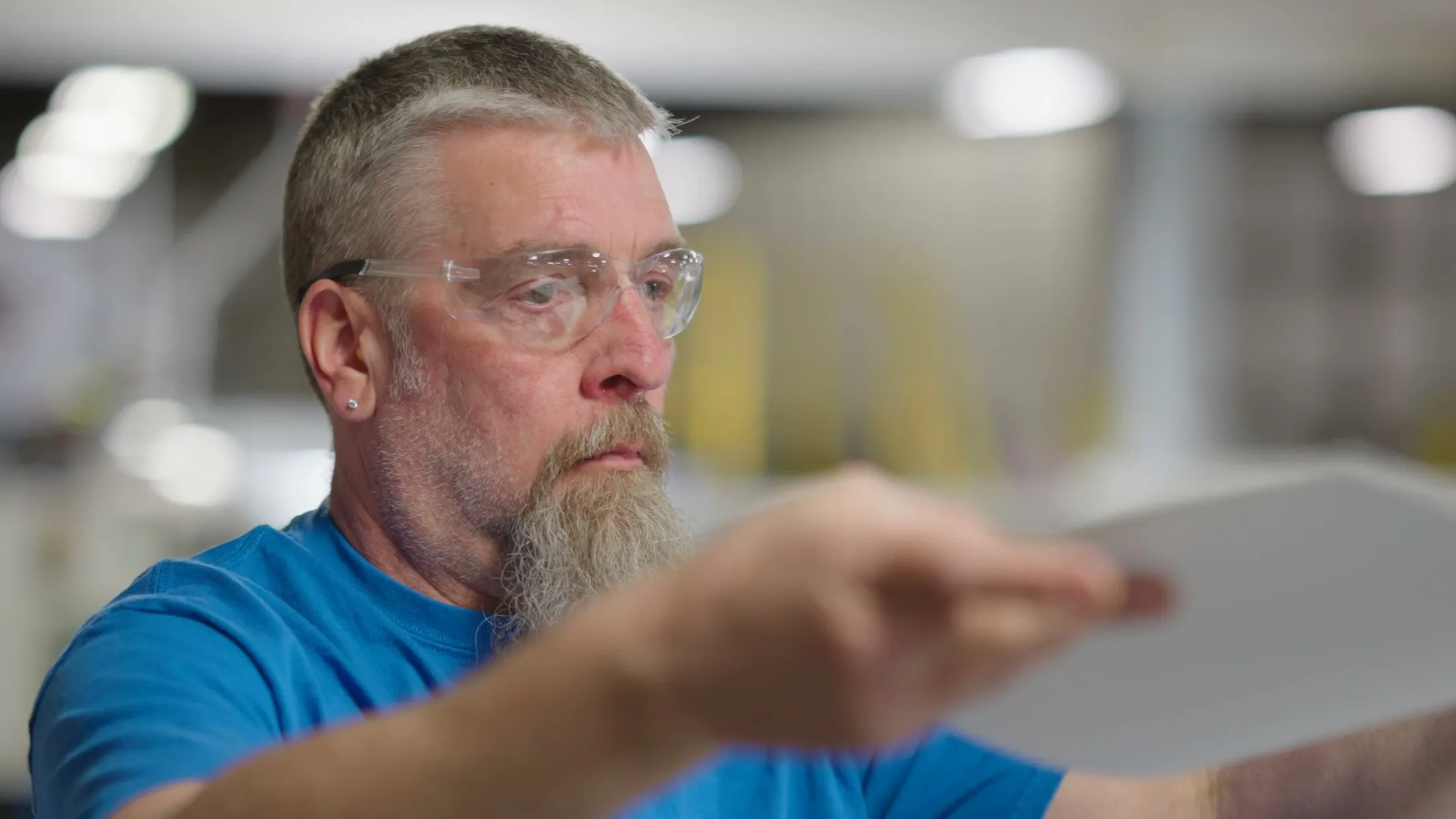
U.S. manufacturers will need another 3.8 million employees by 2033. But 65% of manufacturers surveyed by the National Association of Manufacturers cite attracting new workers and retaining talent as their biggest challenges.
More than half of manufacturing jobs will remain unfilled if the industry can’t solve this problem.
But what eludes manufacturers fighting for talent is that this is more a visibility problem than it is a hiring problem.
Manufacturers are competing for attention in local labor markets where every company sounds the same on paper and people aren’t sure what to expect on the first day. Candidates aren’t seeing the real work or hearing from the real people already doing the job.
When everything sounds the same, a well-crafted and deployed recruitment video can help a business do two things:
1. Attract new talent.
2. Show them why they’ll want to stay.
Need to find more qualified applicants for your manufacturing roles? Let’s talk strategy. Schedule a 30-minute Discovery Call with Media Corep to learn how our videos can help you find and keep the right people for your team.
How Is the Manufacturing Workforce Changing?
The manufacturing workforce is changing as longtime employees retire faster than new workers can replace them.
As the old guard ages out, some of their knowledge is documented. But a lot of industry knowledge leaves with them.
It’s in the head of the operator who can hear when a machine is slightly off before a sensor catches it. Or the supervisor who knows how material performs under pressure because they’ve seen it fail three different ways.
“We see a lot of manufacturing companies with an older talent pool that’s about to phase out,” says Jake Langmade, owner/integrator at Media Core. “Companies aren’t being proactive about transferring that knowledge to a new generation. There is a lot of technical information, and new staff need time to learn from experienced staff.”
As any hiring manager or company leader knows, hiring talented employees is more than an issue of headcount. It’s about maintaining capability. And in an industry suffering from the “sea of sameness” issues plaguing most industry marketing and hiring, ensuring your message and differentiators to prospective employees isn’t a “nice to have,” it’s an operational necessity.
Why Aren’t Employees Choosing Your Plant?
Employees aren’t choosing your plant because they can’t tell it apart from your local competitors.
That’s exactly the problem Wenger Corporation needed to solve with their recruitment video.
“We’re challenged to bring in good talent because we are in a community that has a lot of manufacturing and a lot of competition for talent,” says Chasidy Christiansen, human resources manager at Wenger. “Our goals for the video were really to speak to the cultural aspect of Wenger Corporation, and why anybody would want to work for Wenger Corporation in comparison to the next three companies down the street.”
Candidates aren’t just evaluating compensation. They want to know
- Who they will work with.
- How employees are treated.
- What they can learn.
- Where the company is going.
- Whether the work offers a future or only another paycheck.
A recruitment video gives manufacturers something that a job description can’t: a chance to show the differences.
Here’s how Wenger showed candidates what it was like to work at their plant:
How Can Manufacturers Increase Retention Rates?
Manufacturers can increase retention rates by showing candidates what the job is really like before they take it. Retention problems start on day one, when there’s a gap between expectation and reality.
Some candidates expect a clean, quiet, highly automated manufacturing environment but walk into something hotter, louder, and more physically demanding than they imagined.
Or they might assume manufacturing jobs are dark, dirty, and boring, so they never apply to a facility with advanced equipment and a technical career path.
Both situations have the same issue. The job was never clear, so the position either stays open or sees a rotating door of candidates come and go.
A good manufacturing recruitment video has to give candidates a real sense of
- The production floor
- Machinery and technology
- Noise and movement
- PPE and safety expectations
- Lighting and physical conditions
- Shift structures
- The pace of the work
- The products being made
The goal shouldn’t be to make the job look perfect. The goal is to remove any surprises.
We’ve seen companies lose new hires because employees walked into an environment that was nothing like what they expected. In some cases, they don’t even return after their first lunch break.
Candidates will still choose a loud, hot, physically demanding job as long as they know what they are walking into. Make sure they know the reality of the position so you don’t end up spending training dollars on someone who is going to leave after lunch.
How Do You Attract Better Manufacturing Job Candidates?
You attract better candidates by hiring for traits you can’t teach (reliability, curiosity, and a willingness to learn) rather than for skills alone. Most manufacturers are happy to train someone to perform the role.
You don’t need someone who is fully trained. You need someone who can learn.
A recruitment video can speak to people who maybe never considered a manufacturing job before. It can show them that your company is willing to teach them valuable technical skills if they have
- Curiosity
- Good problem-solving
- Initiative
- Willingness to learn
- Pride in their work
Employees who believe they can gain skills that will matter in the future are less likely to leave their organization.
Show candidates that training can be a reason to choose your company. Show them the equipment they can learn to use and add to their resume.
Show them what they could become if they choose to be a part of your business.
Longtime employees are your best proof that a real career exists in your plant.
Put those workers in front of the camera to explain how they started, what they learned, and why they stayed. They can tell younger employees what to expect and where they might be able to advance within the organization.
This does more than make the video feel more authentic. It introduces candidates to the real people they might be learning from.
How Do You Use a Recruitment Video to Attract and Retain Manufacturing Employees?
You use a recruitment video by integrating it into every stage of hiring, not just posting it to your careers page. A recruitment video only works when it gets used
We help manufacturers get more ROI from their recruitment video by integrating it into every stage of their recruitment process, including
- Local digital advertising
- Pre-interview communication
- Sending it to technical schools
- Using it for employee referral campaigns
- Playing it at hiring events
The video can introduce people to manufacturing jobs, help them understand the job before they hit apply, and support retention with an honest picture of the culture from the start.
We make sure the message is clear, then give you a plan to spread that message far and wide.
Waiting is Costing You More Than an Open Position
Open manufacturing roles aren’t just lingering job ads. There is more overtime and pressure on the people who stayed. They are slower production and supervisors trying to fill in the gaps.
When experienced people retire without passing on their knowledge, the cost is even harder to calculate. Your company ends up losing knowledge that took decades to build.
But a new workforce isn’t going to appear on its own.
Start recruiting before your knowledge base retires and before open positions start to limit your production line.
Ready to get started? Contact Media Core today to learn more about our recruitment videos and how we can create a strategy to bring the right people to your manufacturing business.